Ageing, the brain and YOGA
There are a lot of claims about how to keep your brain healthy into old age. Cognitive impairment, often (incorrectly) called dementia, is a fear shared by many people as they age. 1 lost item or episode of forgetfulness, will have many older people doing a memory test. Recall does slow.
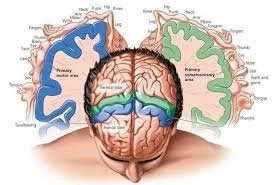
The Homunculus. distorted image of the sensory and motor cortex of the brain and its relationship to areas of the brain.
The mind-body connection is vital
Yes, the brain does alter as we age, just as all part of the body ages. Your brain health is closely linked to the rest of your bodies health trajectory.
Some of the main changes are a shrinkage of the outer layer-the gray matter. This houses the neurones, that record your memories and ability to perform activities of daily living. The brain is divided into specific regions with specific functions, but you can look this up on any youtube. Just suffice here to treat the brain and body as a whole.
Other changes occur to the transmission wires - the neuronal pathways in the white matter. This is below the gray matter. There is a decrease in the number of neuronal pathways and the myelin sheath (insulation) around these axons does become less effective. This results in slower and less specific transmission of nervous messages.
What you can do.
Keep your Circadian clock on time. As many people age, they do not get outside in the morning. Daylight on the back of the eyes, and the production of Vit D via the skin, all help to keep the brain healthy. The special senses such as sight, hearing and taste also all work to stimulate the health of neuronal pathways.
Stress & Sleep: Sleep is essential for brain health as this is when the garbage collection and cleaning team comes in and cleans out all the metabolic waste that has accumulated during the day. The brain consumes 20% of the available energy sources in the body. The GLYMPHATIC system is the brains lymphatic system. This nightly ‘clean-out’ is essential for brain health.
YOGA offers many practices to aid sleep and glymphatic function. The Alternate nostril breath (Nadi Sodhana) and Bhramari (Buzzing Bee breath) are excellent to relax the neck and reduce stress before sleep. The neck muscles have to be relaxed to allow for the glymphatic drainage to return to the venous system.
Daily exercise is another essential component of brain health. Research from brainfit.world, found that the increased blood flow to and from the brain, is essential for healthy brain tissue and function. The brain takes 20% of the cardiac output (oxygen rich blood coming out of the heart). The brain requires a constant supply of oxygen for its high energy requirements to function correctly.
Pranayama: The yoga practice is more than just controlling the breath. The visualisation of ‘taking’ in the vital life force with every breath, enhances the mind-body balance and connection with the universe. Yes, learning breath control is part of a pranayama, but the connection with the energy of life, needs to be incorporated.